Watch winder How many rotations per day (RPD) should I set?
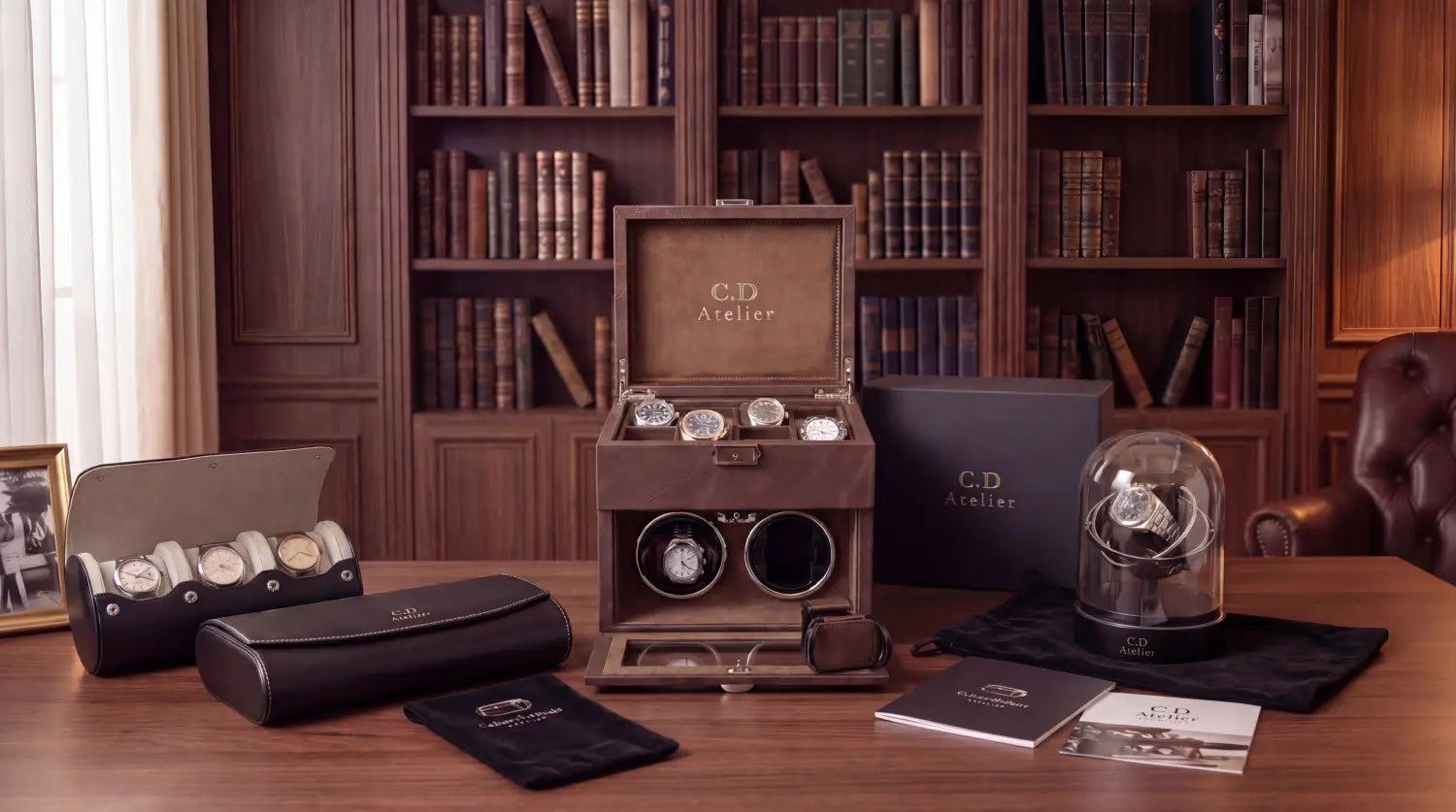
You have just purchased a Watch winder (or watch winder), and one question keeps coming up: how many turns per day should you actually set it to? This setting, known as TPD ( Turns Per Day), is at the heart of how a Watch winder works. If set incorrectly, it can either cause your automatic watch to stop or put unnecessary strain on it. When set correctly, it keeps your timepiece running accurately and ready to wear, without any effort on your part. In this comprehensive guide, Atelier Cohen Dubois explains everything you need to know to choose the right TPD for your watch and brand.
What exactly is the TPD?
The TPD refers to the total number of rotations that the Watch winder the cushion (and therefore your watch) to make over a 24-hour period. An automatic watch winds itself through the movement of your wrist: an oscillating weight rotates and winds the mainspring, which stores energy. When you are not wearing your watch, it eventually stops once its power reserve is depleted. The role of a watch winder is to replicate this natural movement to keep the mechanism active.
But be careful: more isn't always better. Each caliber has its own power requirements. Setting the beat rate too high causes premature wear on the components; setting it too low isn't enough to maintain the power reserve. Finding the right TPD is therefore a matter of balance.
Which TPD for Which Watch? Reference Values
Most modern automatic watches operate within a TPD range of 650 to 900 rotations per day. This is the safe range that suits the vast majority of calibers. Here are some guidelines by major movement families:
| Brand / Caliber | TPD recommends | Direction of rotation |
|---|---|---|
| Rolex (most calibers) | 650–800 | Bidirectional |
| Omega | 650–800 | Bidirectional |
| Tudor | 650–800 | Bidirectional |
| Seiko | 650–950 | Scheduled or bidirectional |
| Breitling | 650–800 | Bidirectional |
| Patek Philippe | 800–1,000 | Two-way / Clockwise |
These values are for reference only: always consult your watch’s manual or the manufacturer’s website, which specifies the official TPD for your model. If in doubt, using a moderate value of around 800 TPD in bidirectional mode is the safest choice.
Why the direction of rotation matters just as much as the TPD
The TPD never operates on its own: it goes hand in hand with the direction of rotation. Depending on the design of the oscillating weight, a watch winds clockwise, counterclockwise, or both. Three settings are generally available on a good Watch winder :
- Schedule (CW): The hammer only cocks in one direction.
- Counterclockwise (CCW): for calibers in which the rotor rotates in the opposite direction.
- Two-way (both): the universal choice, which fits most watches and distributes the force evenly.
If you're unsure, the bidirectional mode is almost always the right choice: it ensures that the mainspring will be wound regardless of the direction in which you wind your watch.
How do you actually adjust the TPD on your Watch winder
The method varies depending on the model, but the principle remains the same. Here are the usual steps:
- Determine what your watch needs: consult the manual or the brand's website to find out the TPD and the recommended direction.
- Select the rotation direction on the Watch winder clockwise, counterclockwise, or bidirectional).
- Choose the TPD: Watch winders offer preset settings (for example, 650, 750, 850, 1000 TPD) or continuous adjustment.
- Place the watch on the cushion so that it fits snugly, without forcing it, with the bezel facing outward.
- Check after 48 hours: if the watch is on time and maintains its power reserve, the setting is correct. Otherwise, slightly increase the TPD.
Good to know: Most Watch winders operate in cycles. They do not run continuously but alternate between rotation and pauses to achieve the target daily rotation count over a 24-hour period, while protecting the movement.
Silence: An Underestimated Factor
Setting the right TPD is pointless if the Watch winder keeps Watch winder awake. A high-quality motor—typically a Japanese Mabuchi motor—operates below the threshold of human perception, allowing you to place the device in a bedroom or office without any disturbance. This is exactly what discerning enthusiasts are looking for: virtually silent operation, smooth cycles, and mechanics that remain reliable over time. Our models, such as the ultra-quiet Rbyenou Series 1, were designed specifically with this requirement in mind.
A single Watch winder multiple slots?
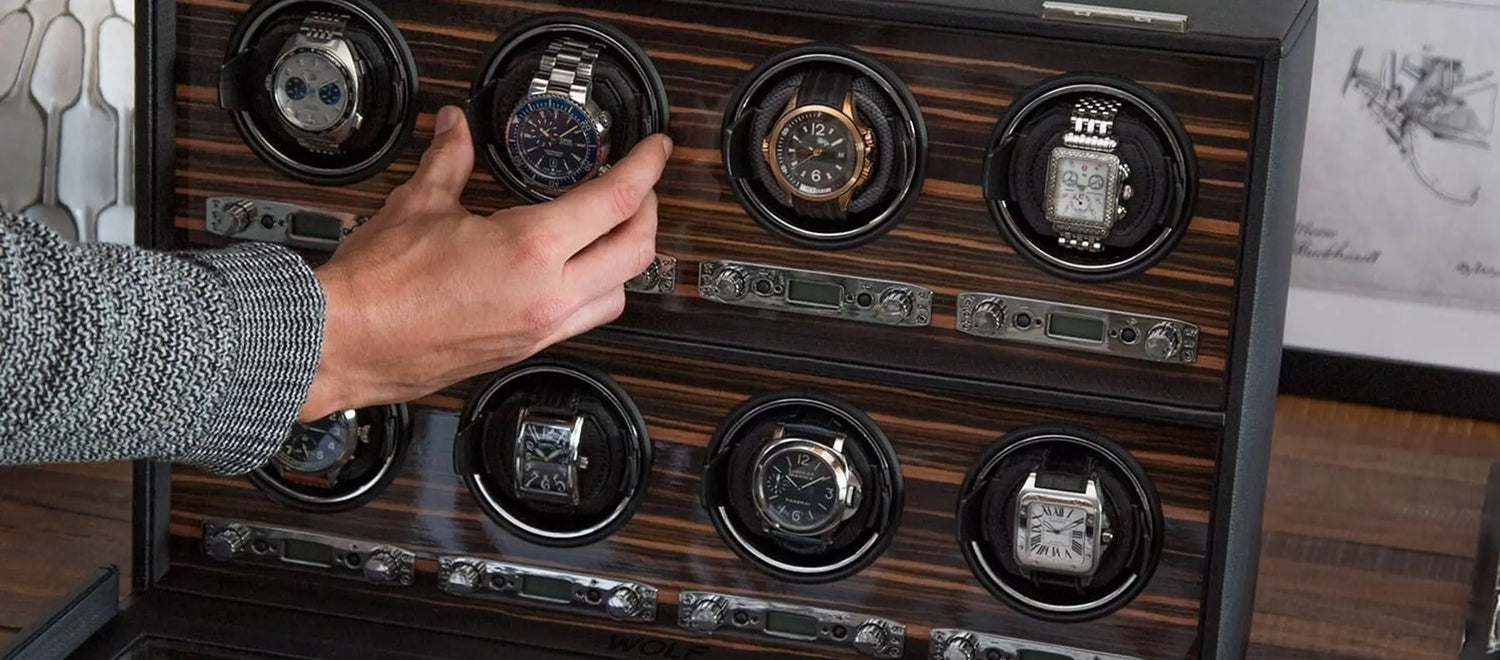
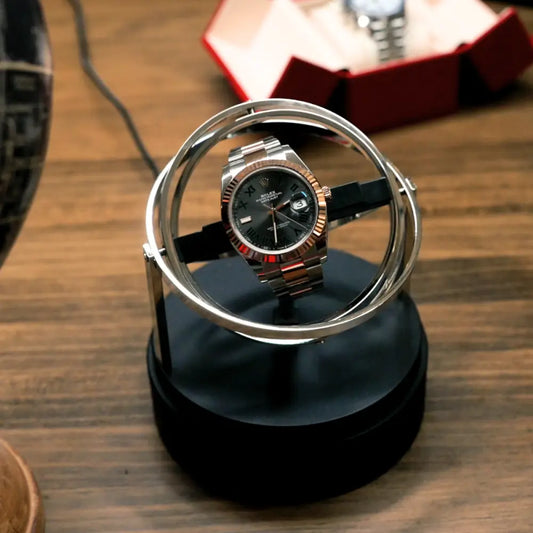
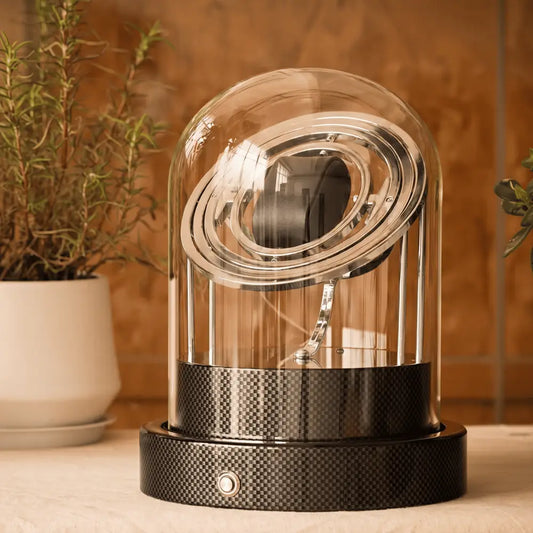
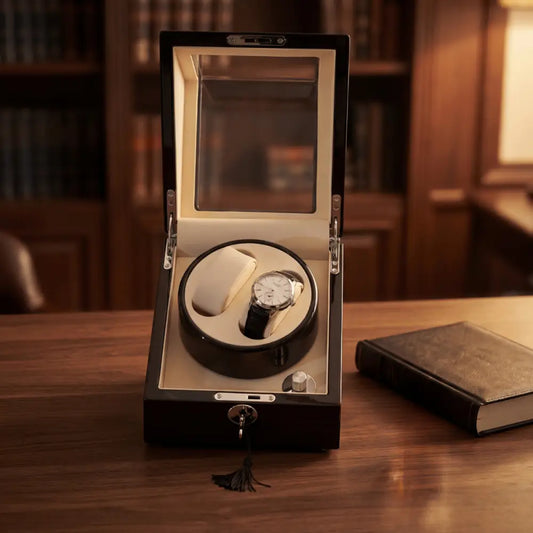
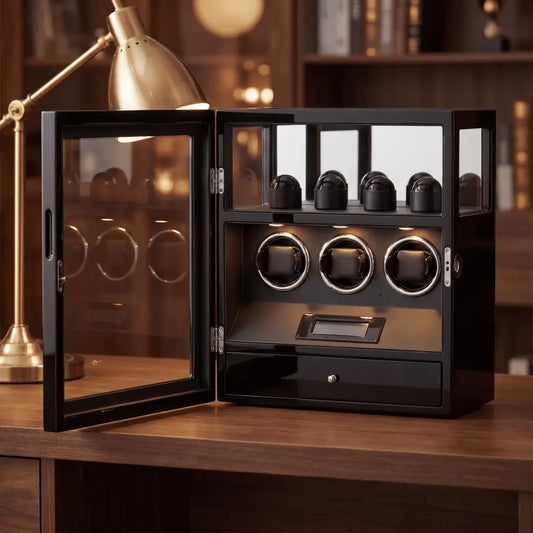
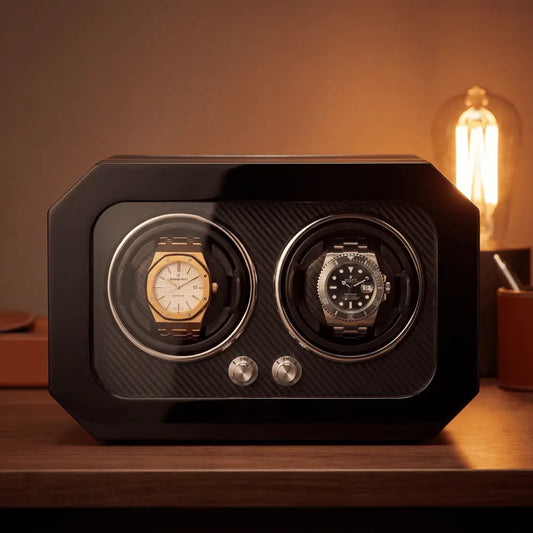
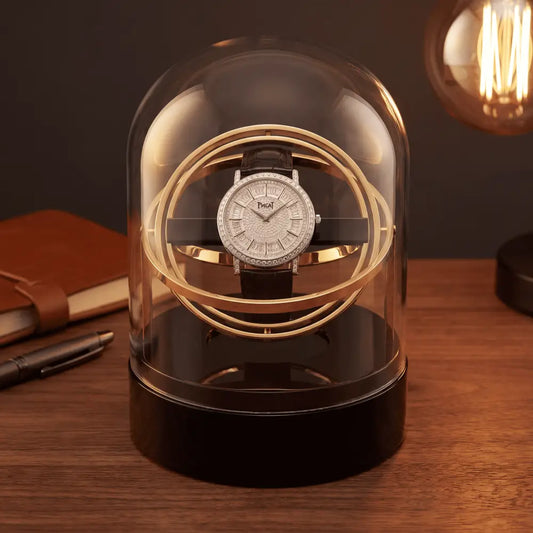
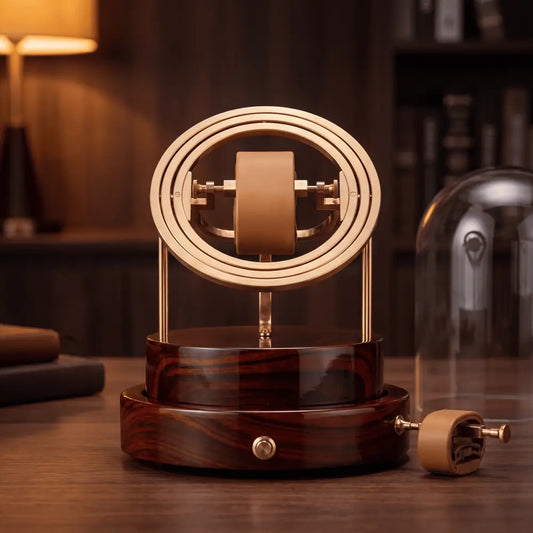
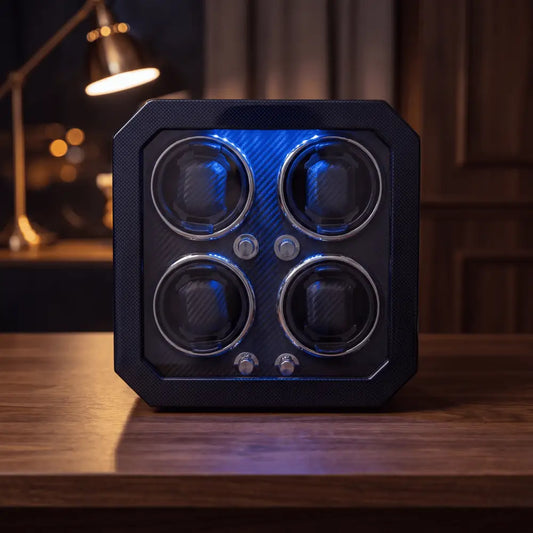
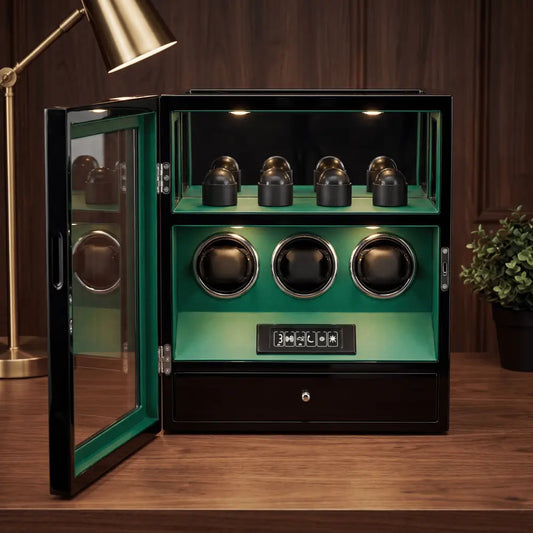
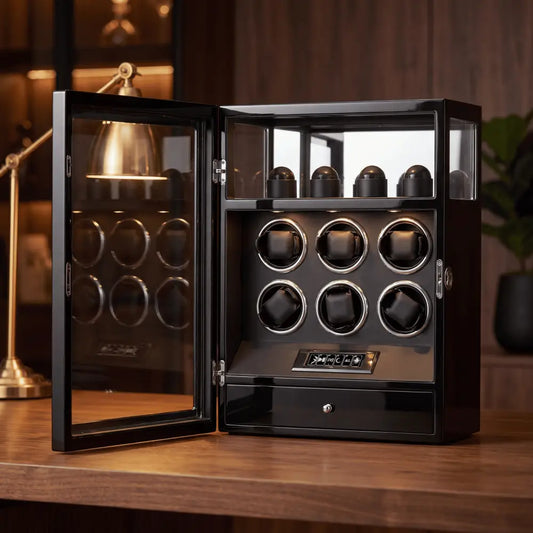
If you own only one automatic watch, a single-watch model is more than enough: it’s compact, economical, and easy to set. To get started,the Elegance Simple or the Sphere Cosmique are excellent choices. As your collection grows, it’s better to opt for a model with multiple compartments, each capable of holding a TPD with a distinct setting: this way, a Rolex and a Seiko can coexist without compromise. The Nuit Noir Double, or our Crimson Prestige, Vert Souverain, Noir Imperial, and Noble Heritage lines (available in 2, 3, 6, 9, or 12-watch configurations), meet this need. Discover our entire selection of models in our store.
Mistakes to Avoid with the TPD
- Setting the TPD to the maximum "just to be safe" is the best way to wear out the mechanism unnecessarily.
- Ignore the direction of rotation: a perfectly balanced TPD rotating in the wrong direction may not wind the watch.
- Do not check after two days: only an actual test can confirm that the adjustment maintains the power reserve.
- Forget the manufacturer's manual: every caliber has its own specific characteristics—don't just guess.
FAQ: Your Questions About the TPD
Can a TPD that's too high damage my watch?
In the short term, no, because modern watches have a clutch that prevents the mainspring from being overwound. But over the years, a consistently excessive TPD puts more strain on the components. It’s best to stay within the range recommended by the manufacturer.
What happens if the TPD is too low?
The watch is not receiving enough power: it may lose power reserve, run slow, or even stop. If this happens, increase the TPD in small increments until the time stabilizes.
Which TPD should I choose if I don't know my exact part number?
Choose a conservative setting of around 750 to 800 TPD in bidirectional mode. This configuration is suitable for the vast majority of automatic watches and is an excellent starting point.
Should you leave the watch on the Watch winder all the time Watch winder
Yes, that's the whole point: your automatic watch stays on time, with the date and complications up to date, ready to wear. The Watch winder the movement of your wrist while you're not wearing it.
Is the TPD the same for a Rolex and a Seiko?
Not necessarily. Many Rolex watches only require 650 to 800 TPD in bidirectional mode, while some Seiko models—whose rotor winds in only one direction—may require a slightly higher TPD or a time-only mode. That’s why an independently adjustable Watch winder is so useful.
TPD and Power Reserve: The Right Instinct
The power reserve is the amount of time a watch will run once it is fully wound, without any additional energy. It generally ranges from 38 to 72 hours depending on the movement, and some high-end models exceed 5 days. A Watch winder keeps this reserve at its maximum at all times: your watch never drops below its operating threshold. That’s why the right TPD isn’t just a matter of convenience, but also of longevity: a watch that never stops and never restarts experiences fewer torque fluctuations in its mainspring, ensuring chronometric stability over time.
Conclusion
Adjust the TPD on your Watch winder is no rocket science: it’s simply a matter of meeting the needs of your movement, selecting the correct rotation direction, and then checking it after 48 hours. With a good watch winder—quiet and precise—your watch will always be waiting for you, on time and ready to wear. It’s this discreet convenience that transforms the daily life of a watch enthusiast.
At Atelier Cohen Dubois, every Watch winder precise adjustments, a quiet motor, and meticulous craftsmanship—whether it’s designed to hold a single watch or an entire collection. Discover our Watch winders watch boxes and give your timepieces the home they deserve.